
By Michael Wachira
The Kenyan government has revised its 2026 economic growth forecast downward from 5.3 per cent to 5.0 per cent, citing heightened global uncertainty, particularly the ongoing conflict in the Middle East and its impact on energy markets.
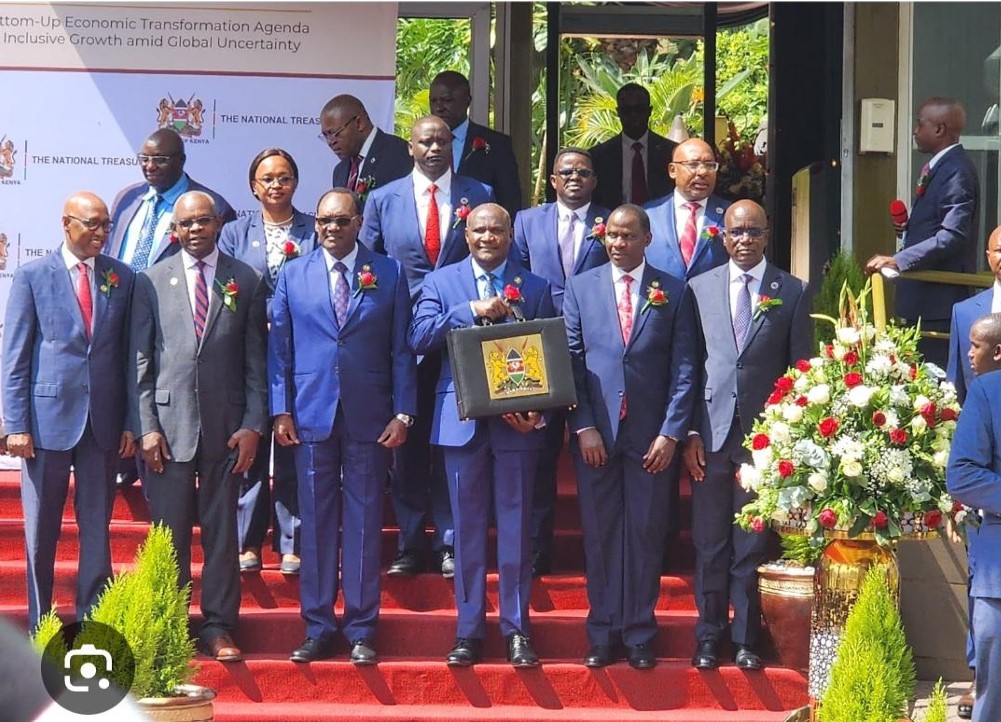
Treasury Cabinet Secretary John Mbadi announced the revised projection while presenting the 2026/27 national budget in Parliament on Thursday. He said disruptions to key shipping routes and global energy supply chains have pushed up fuel prices, increasing transport and production costs and slowing economic activity in Kenya.
“The outlook for 2026 has been revised down to five per cent from an earlier projection of 5.3 per cent, reflecting the adverse impact of the ongoing conflict in the Middle East on domestic economic activities,” Mbadi said.
Despite the downgrade, the government maintained that the economy remains resilient. Treasury projections show growth recovering to 5.2 per cent in 2027, supported by reforms aimed at boosting investment, improving agricultural productivity, and expanding the services sector.
The revised outlook comes alongside the unveiling of a KSh 4.82 trillion budget for the 2026/27 financial year, which prioritises sustaining growth while managing rising public debt and cushioning households from economic pressure.
Read Also: Who's fooling whom on JKIA deal? Chirchir triggers more questions
The Treasury also projects inflation to remain within the Central Bank of Kenya’s target range of 2.5 to 7.5 per cent, provided geopolitical tensions do not escalate further and food prices remain stable. Favourable weather conditions and a stable exchange rate are also expected to support economic stability.
Economists warn that prolonged instability in the Middle East could continue to strain Kenya’s economy, particularly through higher fuel import costs. Kenya remains heavily dependent on imported petroleum products, making it vulnerable to global oil price fluctuations.
At the same time, the government faces pressure to finance development projects without increasing the tax burden on households already grappling with a high cost of living. Treasury has pledged to broaden the tax base through improved compliance rather than introducing new taxes.
Read Also: Heated debate as MPs pass Finance Bill 2026
Regional analysts note that Kenya is among several East African countries revising growth forecasts due to global shocks, rising debt levels, and uncertain international markets.
The revised projection underscores the delicate balance facing policymakers as they seek to sustain economic recovery while maintaining fiscal discipline amid persistent global headwinds.