NAIROBI, Kenya, Apr 24 — African civil society leaders have warned against a proposed “dual-track” system in global pandemic negotiations that would allow unrestricted access to pathogen data without obligations, saying it risks entrenching the inequities exposed during COVID-19.
Speaking in Nairobi ahead of a critical round of talks in Geneva, the leaders urged governments not to endorse any Pathogen Access and Benefit-Sharing (PABS) Annex to the World Health Organization’s Pandemic Agreement unless it includes legally binding provisions on equity and benefit-sharing.
The warning comes days before WHO Member States reconvene on April 27 for the resumed sixth meeting of the Intergovernmental Working Group (IGWG6 Part B), widely seen as the final opportunity to conclude negotiations before the World Health Assembly in May.
At the centre of the dispute is an informal “hybrid” proposal that would create two parallel systems: an “open” route allowing researchers and companies to access pathogen samples and genetic sequence data without registration, contracts, or benefit-sharing, and a “closed” route with full obligations.
Civil society groups argue the model would effectively undermine the entire framework.
“Most diseases with pandemic potential, Ebola, Marburg, Lassa fever, mpox, are endemic in Africa, not in Europe or the United States. Yet Europe and the U.S. hold stockpiles of mpox vaccines. Africa does not. Where did they get the genetic sequencing data? From Africa. Free of charge,” said Aggrey Aluso, Executive Director of the Resilience Action Network Africa.
“This is not a negotiation about charity. It is about one of the most strategic resources in 21st-century public health, and every country has something to offer for a robust PABS.”
A good agreement is possible and we have all the right propositions on the table. All actors have to act in good faith.”
The PABS Annex is considered the most contentious element of the Pandemic Agreement, governing how countries share pathogen samples which are critical for developing vaccines, diagnostics and treatments, and how resulting benefits are distributed.
The broader agreement, adopted in May 2025, cannot be opened for signature until the annex is finalised.
African advocates say the stakes are high, pointing to COVID-19 as a cautionary example.
Read Also: Embattled FKF President Hussein Mohammed Dismisses His Suspension, Claims No CHAN Millions Stolen
Despite contributing critical genomic data, including early identification of variants, the continent received less than 3 percent of global vaccine supplies while accounting for about 17 percent of the world’s population.
“The last pandemic was not a failure of science — it was a failure of solidarity. Vaccines existed, treatments existed, but access was rationed by geography and wealth,” said Dan Owala, National Coordinator of the People’s Health Movement Kenya.
“If the PABS Annex is stripped of binding contracts and traceable obligations, we will have rebuilt the same architecture that failed our people the first time.”
Dr Samuel Kinyanjui, Country Director at AIDS Healthcare Foundation(AHF) Kenya, said any agreement must include enforceable obligations, not voluntary commitments.
“When developing countries share their pathogens, they deserve binding, enforceable benefit-sharing in return, not hollow promises,” he said.
“The Pandemic Agreement cannot be ratified without the PABS Annex, and the Annex must not be approved without binding equity provisions. Delay is denial.”
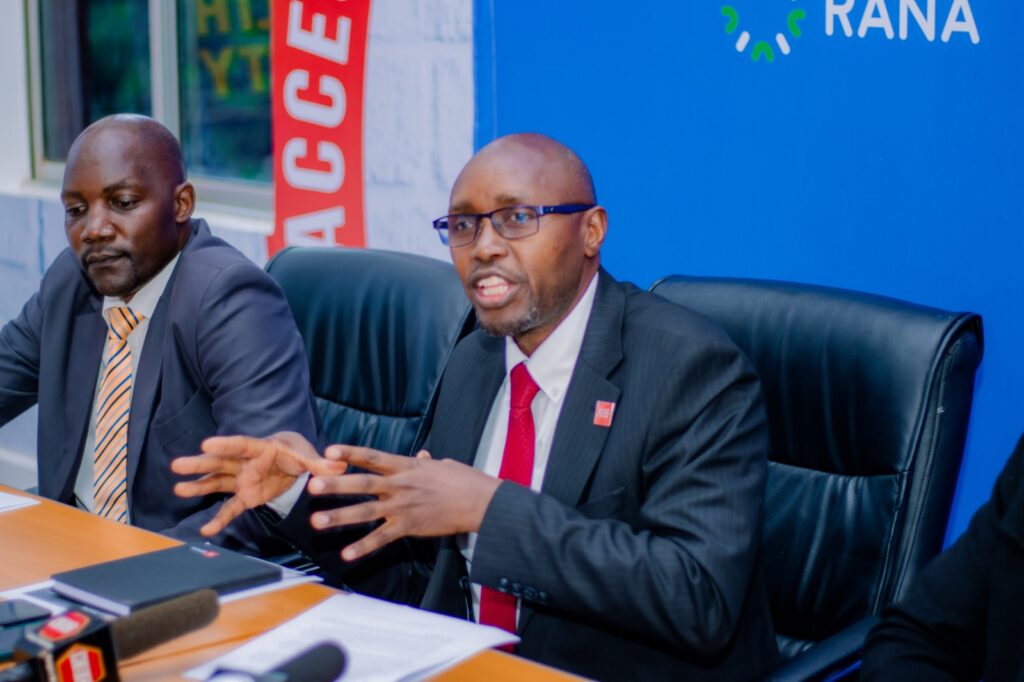
Dr Kinyanjui, Country Director, AHF Kenya, reviews briefing notes during a media engagement at AHF offices in Nairobi on Pathogen Access and Benefit Sharing/AHFAHF, is the world’s largest HIV/AIDS healthcare organisation, providing cutting-edge medicine and advocacy to more than 2.9 million people across 50 countries.
Negotiations have so far exposed deep divisions between high-income and low- and middle-income countries.
More than 100 developing nations are pushing for mandatory benefit-sharing, while several wealthier countries, particularly in Europe, favour more flexible, voluntary arrangements.
WHO Director-General Tedros Adhanom Ghebreyesus has previously acknowledged that the disagreements “go to the heart of equity, access, sovereignty and global solidarity.”
African negotiators, representing a 47-member bloc, rejected a draft proposal in March, citing insufficient consultation and weak equity provisions.
Talks ended without agreement, prompting the reconvening of negotiations this month.
Read Also: Kip Keino Classic lives up to billing, young talents get platform to realise dreams
Civil society leaders are now calling for a unified African stance, warning that failure to secure binding terms could lock in structural disadvantages for decades.
Among their key demands are mandatory benefit-sharing commitments agreed upfront, including set-aside quotas for vaccines and treatments, technology transfer, and financial contributions from companies using shared data.
They also insist on mandatory user registration and traceability within the system.
“No registration, no access,” said Kinyanjui, arguing that transparency is essential to ensure accountability.
“We must know who is using the data and how the benefits are returned.”
Another major concern is intellectual property.
Advocates say publicly shared pathogen data should not be used to create monopolies that restrict access to life-saving products.
“A public health approach means prioritising lives over profits,” Owala said.
“Solidarity must be enforceable, not symbolic.”
The debate also carries significant implications for Kenya, which is seeking to expand domestic pharmaceutical production.
The government aims to locally manufacture at least 50 percent of essential medicines by 2030, up from roughly 30 percent currently.
Civil society groups say the outcome of the Geneva talks will determine whether such ambitions are supported through technology transfer or undermined by restrictive global systems.
Read Also: AFC Leopards, Gor Mahia clash in high-stakes Mashemeji Derby
Pressure is also mounting on European countries to shift their positions.
Advocates have singled out key states, including Germany and France, urging them to align their negotiating stance with commitments to global equity.
“The world is watching,” Aluso said. “A bad agreement is worse than no agreement at all — it would legitimise inequality for a generation.”
They also called for compulsory user registration and traceability across all platforms handling pathogen data, rejecting claims that such requirements would undermine open science.
With negotiations entering their final stretch, civil society leaders say the outcome will shape not just policy, but survival.
“At the community level, this [negotiations] is about whether the next outbreak finds us prepared or abandoned,” said Willis Omondi of Mind To Heart Community-Based Organisation.
“Our plea to Geneva is straightforward: remember that behind every paragraph is a community, and choose accountability over convenience.”
The five-day Geneva meeting is expected to determine whether countries can bridge their differences — or whether the world enters the next pandemic with the same structural gaps that defined the last.
Read more at original source.